

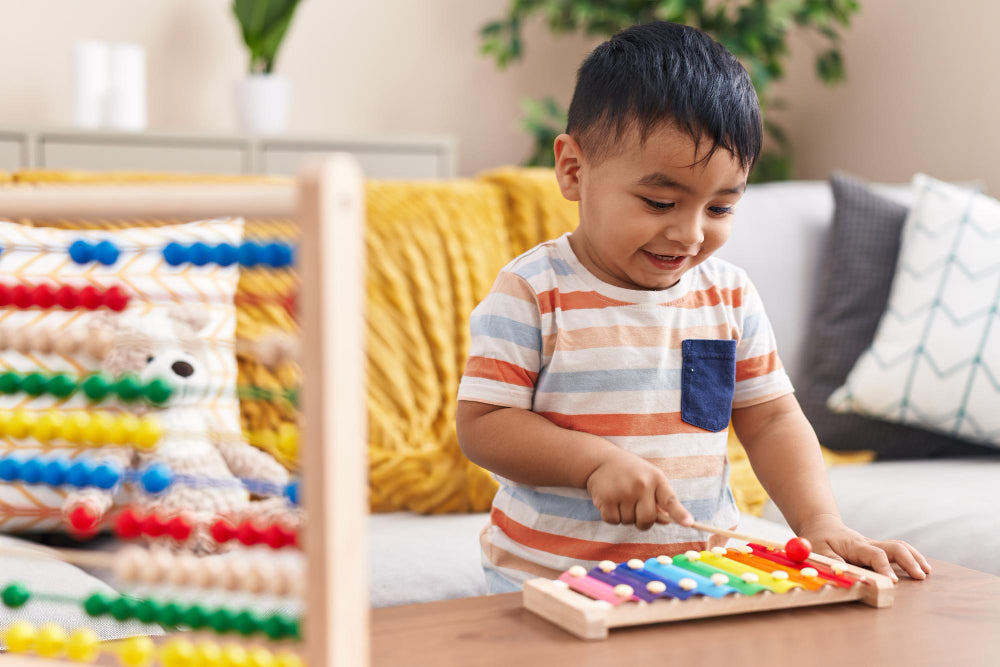

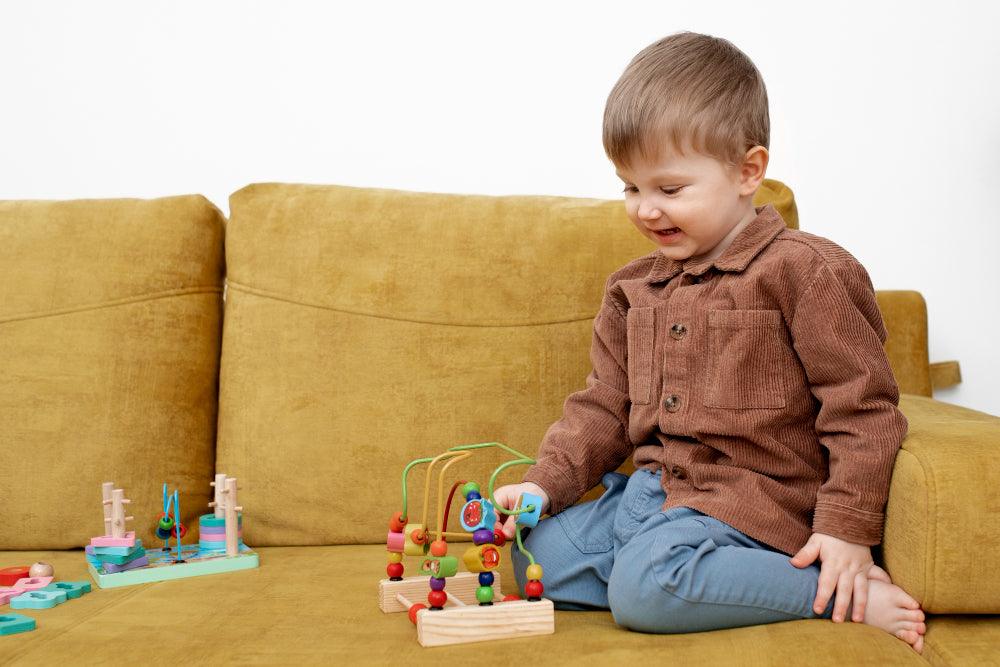
How Educational Wooden Bead Games Improve Your Child’s Thinking Skills
The educational wooden bead game sets of KidsBestie are one of these classic treasures. Interactive toys not only entertain, but also develop the necessary mental ability, encourage creativity and create a basis to learn throughout...
In an age of computer entertainment, parents are re-discovering the incomparable allure of wooden toys in children. The educational wooden bead game sets of KidsBestie are one of these classic treasures. Interactive toys do not only entertain, but develop the necessary mental ability, encourage creativity and create a basis to learn throughout life.
Improves Problem-Solving and Logical Thinking
Children are using strategic thinking when they make beads follow wavy lines or finding matching patterns of colors. It is necessary to plan every step, expect twists and how to solve the maze- an activity that directly enhances the problem solving and reasoning skills. It is a practical exercise that teaches children to be persistent, have a cause and effect knowledge, and to think critically which are the requirements of academic development.
Enhances Fine Motor Skills and Hand-Eye Co-ordination
Each twist and turn of a bead requires the coordination of the eye and hand. When children roll beads over wires, their muscles are exercised and their hand-eye coordination becomes better. Such fine motor coordinations become useful in daily living activities such as writing, shoelace tying or independent feeding. 
Enhances Mental and Geographical awareness
Wooden beads educational games transform abstract learning into tangible, entertaining activities. Children learn space, distance, and direction by following several ways and patterns and this makes them have spatial awareness and visual processing capabilities. This active learning enhances memory and logical sequencing- a skill that will help in mathematics and understanding reading at a later age.
Nurture Creativeness and Imaginative Play
The wooden toys in the shape of educational game encourage open-ended play. This creative liberty may lead to telling stories, role plays, and expressiveness of feelings, whether the children imagine that the beads are cars on a highway or the planets in the air. This non-conformist creativity helps children to be creative and respond to any new challenges.
Increases Concentration and Discipline
When sliding beads, one needs concentration and accuracy. Children will naturally increase the range of their attention over a period as they test with the patterns or as they work out the path of beads. This silent focus gives lessons of patience and emotional control- skills that are necessary in school preparedness and interpersonal communication.
Promotes Sensory Learning and Color Recognition
All the bead games are colorful sensual games. Colorful surfaces engage visual tracking, various textures encourage tactile learning, and fluid movements utilize auditory reinforcements as beads clink and glide. These sensory stimuli strengthen the identification of colors, shapes, and patterns, as well as facilitate brain formation and integration of the sense.
Gains Confidence by Achievement
Every pattern or bead line that is completed provides satisfaction. The tangible outputs of their hard work promote their independence, perseverance, and self-esteem. Kids get to understand that hard work brings rewards- a lesson to be learnt even after the play. 
Promotes Emotional Control and Relaxation
The monotonic movement of beads in the tracks is a relaxing experience like a meditation practice. It lessens hyperactivity and allows kids to relax, particularly after playing a hectic day or watching the screen. Therapists normally use bead toys on children who have autism or are sensory-sensitive, so as to build focus and encourage relaxation.
Promotes Parent Child Interaction
Using wooden toys with children such as educational bead games are good family time. The parents may pose guiding questions, place challenges, or just play with a child. These experiences bring about communication, trust and emotional attachment that reinforce the parent-child relationship.
An All-in-one, Environmentally Conscious Learning Mate
On the side of being safe and eco-friendly, KidsBestie wooden bead games are crafted using natural and non-toxic materials. Their rounded corners and robust structures mean that they are ideal to the toddlers and preschoolers. Compared to plastic toys, these classic displays outlast generations- combining education with future-friendly design.
KidsBestie educational game wooden sets made of beads demonstrate that learning does not necessarily need to be screen based or classroom-based. These traditional wooden kids toys build curiosity, creativity, and confidence, nurture smarter, sharper, and happier kids through the fun of play, and are colorful, hands-on, and easy to clean.
Frequently Asked Questions (FAQs)
Q1. When can my child start playing with wooden beads games?
A majority of children are able to start at the age of about 1 year, touching and color playing. They can be used by 2-4 year old toddlers to solve more sophisticated problems and recognise patterns.
Q2. What are the benefits of bead games in terms of thinking?
They instill logical reasoning, sequence and planning in young minds. Both routes and the patterns of beads stimulate the working of the mind and its choice.
Q3. Are bead games safe to be played every day?
Yes, particularly the ones that are made of child-safe and non-toxic wood. They are strong, splinter-free, and they are small-hand friendly.
Q4. Are such toys helpful to children experiencing developmental delays?
Absolutely. Therapists will frequently prescribe bead games as a means of improving coordination, attention, and sensory processing among children with autism, ADHD or motor difficulties.
Q5. What does my child learn besides being able to think?
Bead games also develop patience, collaboration during group play, and emotional control of self through repetitive and concentrated play in addition to cognitive development.